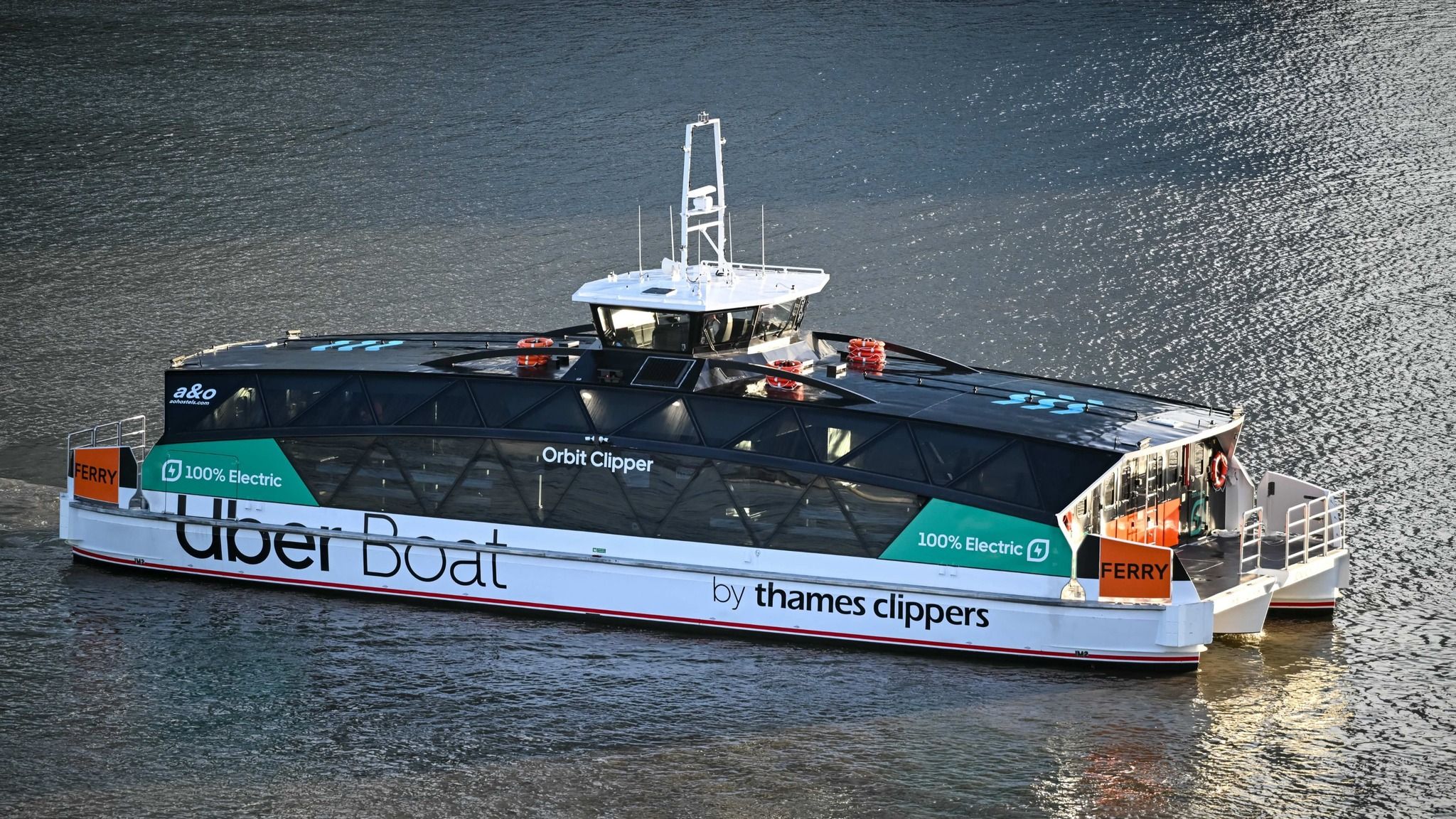
Uber’s new electric ferry “Orbit Clipper” at Canary Wharf. The fully electric Orbit Clipper ferry launched in December 2025, completing its first passenger crossing on Dec 5, 2025 and marking the UK’s first zero-emissions river bus service. Operated by Uber Boat by Thames Clippers, this zero-emission vessel now carries commuters and cyclists across the Thames between Rotherhithe (south bank) and Canary Wharf (north bank), with space for 150 passengers and 100 bicycles. As a dedicated river-bus shuttle, it operates about every 10 minutes on weekdays (15 minutes at weekends).
Launch and Route
The Orbit Clipper was publicly unveiled on Dec 5, 2025 in a ceremony attended by London Mayor Sadiq Khan and other officials. Built by the UK’s Wight Shipyard Company (working with Aus Ships and others) and partly funded by the Department for Transport and Innovate UK, it is Britain’s first fully electric passenger ferry. Initially it runs alongside the older diesel ferry Twinstar to ensure continuity, but it will gradually replace Twinstar and become the sole crossing on that Rotherhithe-Canary route by Spring 2026.
Technology and Features
Orbit Clipper’s design emphasizes sustainability and efficiency. Key features include:
- Fully electric powertrain: The ferry runs 100% on battery power (zero tailpipe emissions). It uses a 960 kWh marine battery pack and recharges overnight at Canary Wharf via high-power shore connections.
- Automated docking: A double-ended, roll-on/roll-off design enables quick self-docking at each pier, minimizing turnaround time.
- High capacity: It carries 150 seated passengers plus up to 100 bicycles, supporting London’s multi-modal commutes.
- Frequent shuttle service: As a commuter ferry, it can run at 12 knots and is scheduled to cross every 10 minutes on weekdays.
The project involved multiple partners: Wight Shipyard built the aluminium hull, Beckett Rankine provided naval engineering, and Aqua superPower installed the charging infrastructure. The vessel supports Uber Boat by Thames Clippers’ sustainability goals (cutting River Bus emissions 50% by 2035) and expands on an existing fleet of hybrid-electric ferries (Earth, Celestial, Mars Clipper) that already run on battery power in central London.
Tickets, Pricing, and Uber App Integration
Travelers can book Orbit Clipper rides much like ordering an Uber taxi: tickets are sold directly through the Uber app (under the “Uber Boat” travel option). Passengers can also purchase tickets via Thames Clippers’ own app or website, at pier ticket offices/machines, or by tapping a contactless bank card or Oyster card on board. For example, an adult single crossing of Rotherhithe-Canary Wharf (in the TfL East Zone) costs about £5.90 (7.96 USD) with an Oyster/contactless fare (about £7.10 (9.58 USD) if bought at the pier).
- Apps and online: Users open the Uber app, select an available river crossing (24+ piers citywide) and pay in-app. Thames Clippers’ “Tickets” app and website also sell the same journeys, often with season passes or bundle discounts.
- On-site payment: Piers have staffed ticket offices and machines for single/return tickets. Commuters can tap contactless/Oyster at the yellow reader when boarding. Pay-as-you-go cards automatically get the lower (off-peak) fare; cash or onboard purchases cost more.
- Fares and discounts: River Bus fares are zonal (East/Central/West, like the Tube). Off-peak/app/Oyster fares are roughly 30% cheaper than walk-up rates. Weekly/monthly passes, group tickets, and TfL travelcard discounts are also available.
- In short, taking this ferry feels as seamless as hailing a cab. Uber for Business accounts automatically include Uber Boat tickets for employees, integrating the service into corporate commuter plans.
Public and Media Reaction
The Orbit Clipper’s debut was widely hailed as a green transport milestone. Officials praised its eco-credentials, Mayor Khan called it a “fantastic new transport option” that’s cleaner, faster and more accessible for Londoners. Cycling advocates likewise cheered the bike-friendly design: British Triathlon’s CEO noted that carrying 100 bikes per trip gives “a welcome, sustainable alternative” for commuters.
However, some observers grumbled about the fare. News outlets pointed out that a single ride (£4–£6) is higher than nearby tunnel tolls. Critics noted that a canceled pedestrian/cycle bridge (abandoned in 2019) might have offered a free crossing, making the ferry fares feel “overpriced” by comparison. Even some politicians warned that in a cost-of-living crunch, Londoners deserve “accessible … not overpriced ferry tickets”. In fact, Khan had already called a roll-on/roll-off ferry the “most practical” interim solution when the bridge plan was shelved, and he argues that Orbit Clipper now delivers a cleaner, faster service despite the fare debate.
Integration into London’s Transport Network
Orbit Clipper slots into London’s broader River Bus system. Uber Boat by Thames Clippers holds the TfL franchise to operate all River Bus routes (serving 23 piers between Putney and Woolwich). The new electric ferry simply adds another vessel to this network. For example, at Canary Wharf passengers can link to the Jubilee Line, DLR or Elizabeth Line, while at Rotherhithe they can join local bus and cycle routes.
London’s river transport includes commuter ferries, the Woolwich vehicle/cycle ferry, the Emirates cable car, and sightseeing boats. Orbit Clipper is unique in offering a frequent, zero-emission commuter shuttle. By slotting into the Uber Boat scheme and accepting Oyster/contactless and Uber bookings, the Orbit Clipper gives Londoners one more green, convenient option for crossing the Thames.
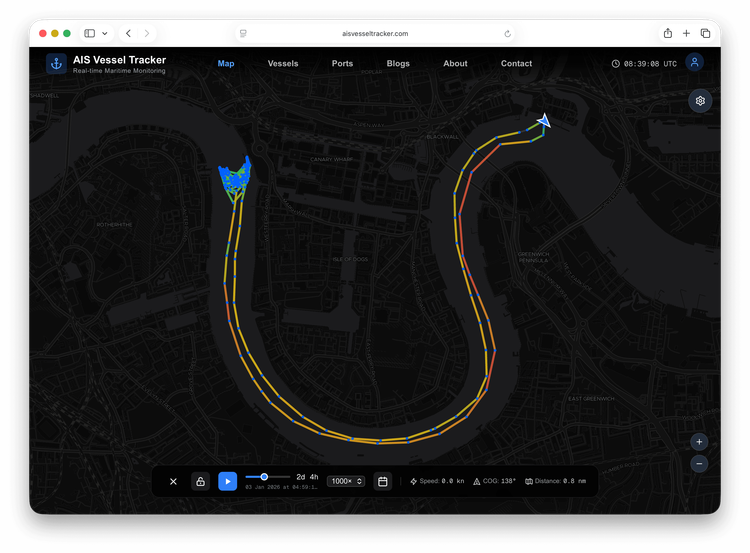
View ORBIT CLIPPER's live position on Voyage Radar: https://aisvesseltracker.com/?mmsi=232059441